The modern workplace continues to evolve. New technologies, changing customer expectations and different ways of working mean that professionals cannot always depend on the skills they learned at the beginning of their careers. Continuous learning has therefore become an important part of long-term professional growth.
Learning does not necessarily mean going back to school or completing a large number of courses. It can include reading industry publications, attending workshops, watching educational sessions, working on practical projects or learning directly from experienced colleagues.
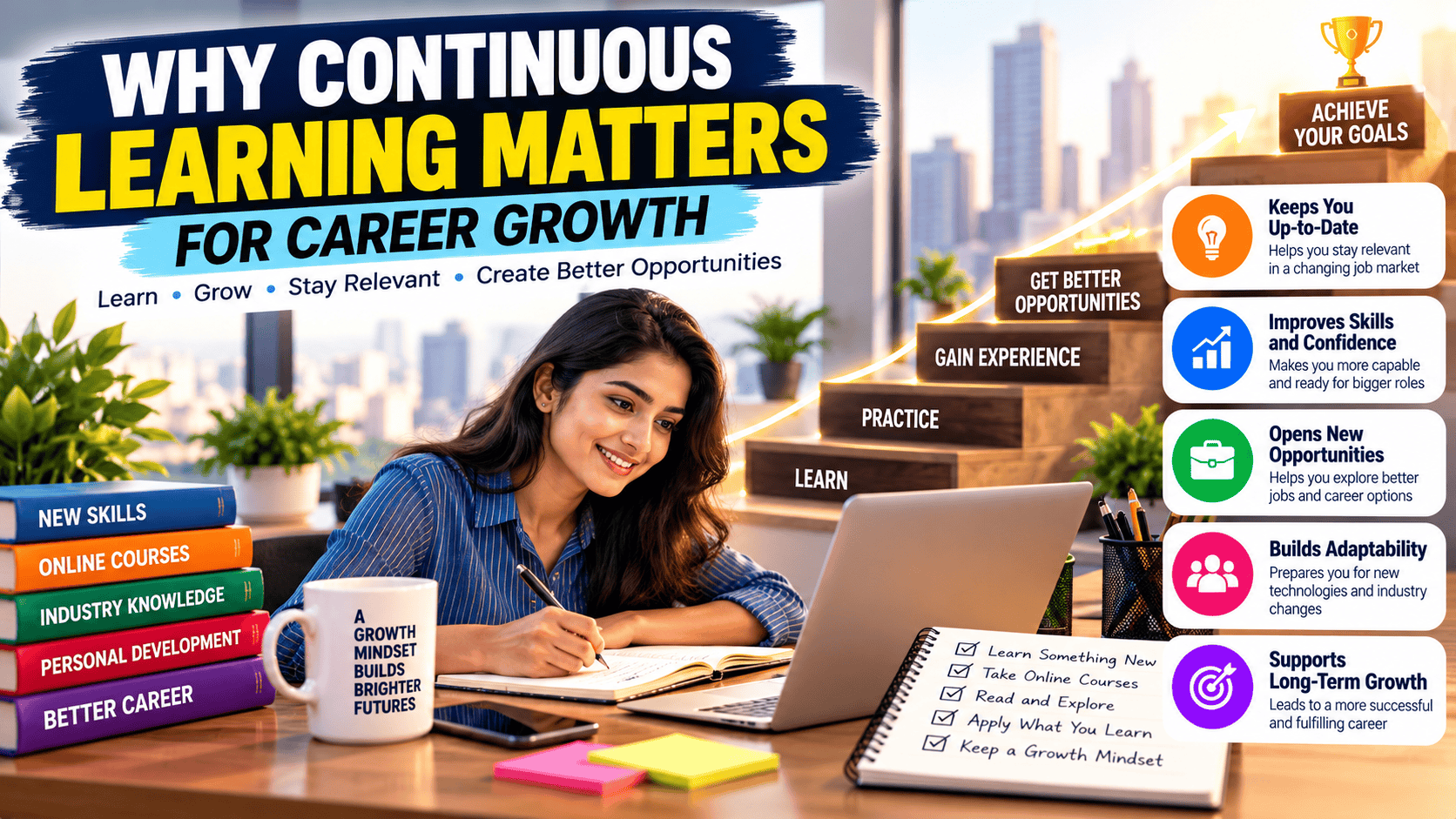
Stay Relevant
Industries change over time. Skills that are highly valuable today may become less important as new tools and processes develop. Continuous learning helps you understand these changes and adapt before they become a major challenge.
Improve Your Confidence
Learning a new skill can increase your confidence. When you understand new tools or concepts, you are more comfortable taking responsibility for unfamiliar tasks. This confidence can also improve how you communicate with colleagues and managers.
Create Better Opportunities
New skills can open doors to different roles and responsibilities. A professional who develops both technical and communication skills may be able to move into leadership, project management or specialized positions over time.
Learn Through Practice
The best learning is often connected to real work. Instead of only watching tutorials, try applying what you learn through practical projects. Build something, solve a problem or find a way to use the new skill in your current responsibilities.
Build a Learning Routine
Consistency is more important than intensity. You do not need to spend several hours every day studying. Even a few focused hours each week can produce meaningful progress over time. Set a simple learning goal and create a realistic routine that you can maintain.
Learn From Other People
Colleagues, mentors and industry professionals can provide valuable perspectives. Ask questions, request feedback and observe how experienced professionals approach complex situations. Learning from other people can sometimes be faster than trying to discover everything independently.
Continuous learning is ultimately an investment in your professional future. It helps you remain adaptable, improve your confidence and prepare for new opportunities. The most effective approach is to identify skills that are relevant to your career goals and develop them consistently through practical experience and learning.
Category
Professional Growth