A job interview is an opportunity to demonstrate more than your technical skills. It allows an employer to understand how you communicate, solve problems, work with others and approach responsibilities. Good preparation can significantly improve your confidence and help you present your experience clearly.
Before the interview, carefully read the job description. Identify the main responsibilities and skills required for the role. Think about examples from your previous experience that demonstrate those skills. Preparing specific examples is usually more effective than memorizing generic answers.
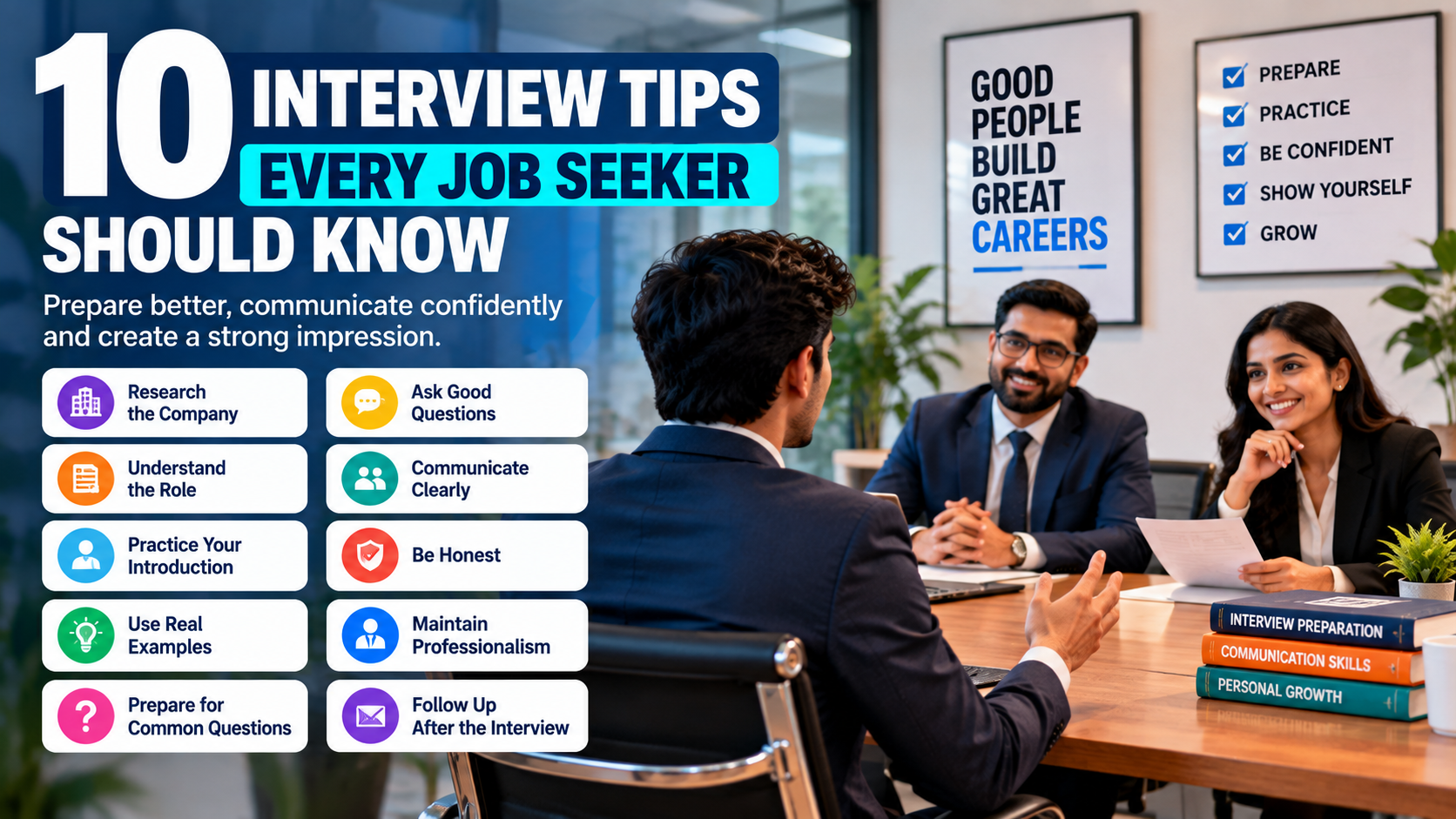
1. Research the Company
Understand what the organization does, who its customers are and what type of products or services it provides. Basic company research shows genuine interest and helps you ask better questions during the interview.
2. Understand the Role
Read the job description carefully. Identify the responsibilities that appear most important and prepare examples that demonstrate your ability to handle them.
3. Practice Your Introduction
Many interviews begin with a simple request such as “Tell me about yourself.” Prepare a short professional introduction that covers your background, important experience, key skills and what you are looking for next.
4. Use Real Examples
When answering behavioral questions, use real situations from your experience. Explain the situation, what you were responsible for, what action you took and what result you achieved.
5. Prepare for Common Questions
Practice questions about your strengths, weaknesses, previous experience, career goals, challenges and reasons for changing jobs. Preparation should help you communicate naturally rather than sound memorized.
6. Ask Good Questions
An interview is also your opportunity to evaluate the company. Ask about team structure, expectations, learning opportunities, company culture and what success looks like in the position.
7. Communicate Clearly
Speak at a comfortable pace and avoid unnecessarily complicated answers. If you do not understand a question, politely ask the interviewer to clarify it.
8. Be Honest
Never exaggerate your experience or claim skills that you do not have. Employers value honesty and a willingness to learn. If you lack experience in an area, explain how you would approach learning it.
9. Pay Attention to Professionalism
Arrive on time, dress appropriately and keep your communication professional. For online interviews, test your camera, microphone and internet connection before the meeting.
10. Follow Up
A short professional follow-up message after the interview can reinforce your interest in the opportunity. Thank the interviewer for their time and mention that you appreciated learning more about the role.
Strong interviews are built through preparation, communication and authenticity. Focus on understanding the role, preparing relevant examples and showing how you can contribute. The goal is not to give perfect answers to every question but to have a productive professional conversation.
Category
Interview Tips